Sleep Challenges and FND
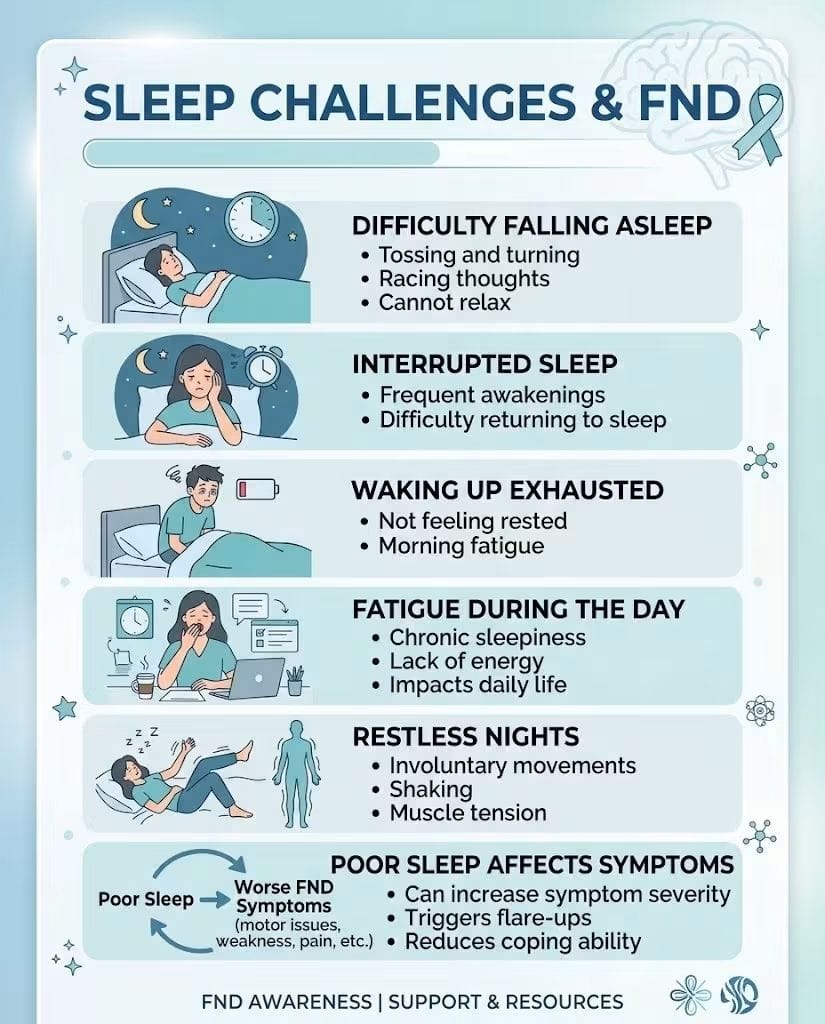
Sleep can be difficult for people living with Functional Neurological Disorder (FND). Problems with getting to sleep, staying asleep or waking feeling rested can have a significant impact on everyday life.
Some people may experience difficulty falling asleep, with racing thoughts, restlessness or an inability to relax. Others may experience interrupted sleep, waking frequently during the night and finding it difficult to get back to sleep.
Even after spending enough time in bed, you may wake feeling exhausted or unrefreshed. Poor-quality sleep can contribute to tiredness, reduced energy and difficulty concentrating during the day.
Some people with FND may also experience restless nights, including involuntary movements, muscle tension or other symptoms that make it harder to maintain comfortable, uninterrupted sleep.
There can be a difficult cycle between sleep and symptoms. Poor sleep may make some FND symptoms feel worse or harder to manage, while symptoms themselves may make getting a good night's sleep more difficult. This can affect your ability to cope with daily activities and may contribute to increased fatigue.
If you are experiencing ongoing sleep problems, it is important to discuss them with your GP or another appropriate healthcare professional. Sleep difficulties can have many different causes, and it may be helpful to explore whether there are other conditions or factors contributing to your symptoms.