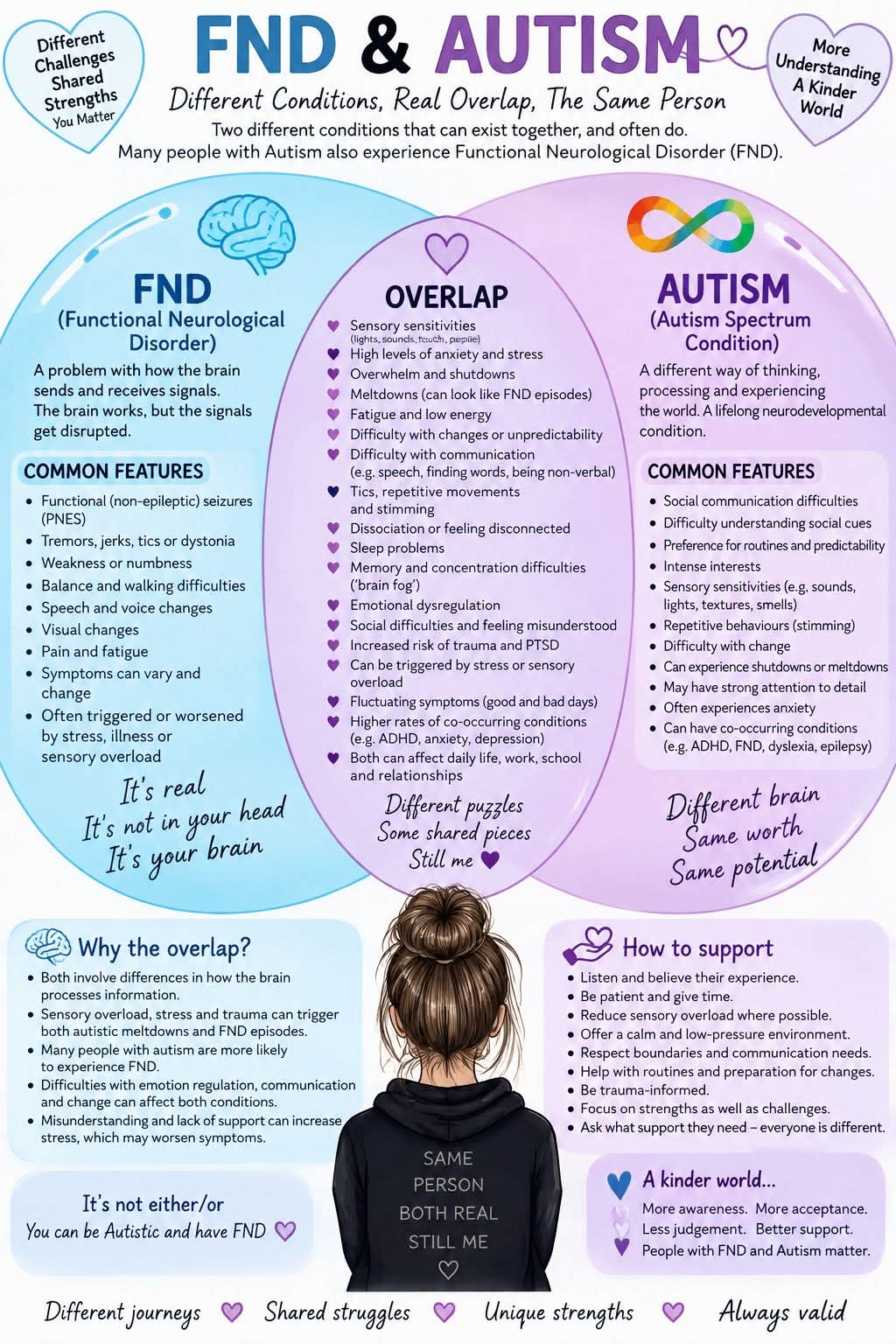
FND and Autism: Different Conditions, Real Overlap
Functional Neurological Disorder (FND) and autism are two different conditions, but they can occur together and share some experiences. In fact, there is a growing link that people with Autism are more prone to FND.
For people living with both, understanding how these conditions interact can help explain why everyday situations may sometimes feel particularly challenging.
Both FND and autism can involve sensory sensitivities, difficulties with change, stress and overwhelm, fatigue, sleep problems and challenges with communication. Sensory overload or significant stress may contribute to worsening symptoms, while autistic meltdowns or shutdowns can sometimes be difficult to distinguish from an FND episode. This can lead to complications for both the sufferer and the professionals in separating the two conditions with episodes.
FND can cause symptoms such as functional seizures, tremors, weakness, movement difficulties, changes in speech or sensation, pain and fatigue. Autism is a lifelong neurodevelopmental condition that can affect communication, sensory processing, routines, social interaction and the way a person experiences the world.
Having one condition does not mean that the other is present, but some people do experience both. Each person's experience is individual, and symptoms should not simply be attributed to one condition without appropriate assessment.
Supporting someone with FND and autism
A supportive approach can make a significant difference. Listening to the person's experience, allowing extra time, reducing unnecessary sensory stimulation, providing predictability and respecting communication needs can all help. Most importantly, ask the individual what works for them rather than making assumptions. This isn't about making excuses to avoid situations; it is about real triggers that can significantly affect FND. Each situation will not guarantee an FND escalation, as it is often about cumulative load.
Different conditions. Shared experiences. The same person.
FND and autism are both real, and people living with either or both deserve understanding, respect and appropriate support.